I. Interactive Simulations and Virtual Experiments
iLab-X – National Virtual Simulation Experiment Teaching Course Sharing Platform
Description: A national sharing platform for virtual simulation experiment teaching projects, bringing together physics virtual simulation resources developed by universities and research institutions nationwide, suitable for advanced inquiry and demonstration of experimental principles.
China Digital Science and Technology Museum (CDSTM)
Description: A national public-welfare science popularization service platform jointly built by the China Association for Science and Technology, the Ministry of Education, and the Chinese Academy of Sciences, offering rich interactive physics exhibits, virtual science experiments, popular science animations, and demonstration resources.
PhET Interactive Simulations (Traditional Chinese Version)
Description: A free HTML5 interactive simulation platform developed by the University of Colorado Boulder, covering mechanics, circuits, optics, thermodynamics, and modern physics, supporting direct operation in a web browser.
CK-12 Physics Simulations (Traditional Chinese Version)
Description: Physics animations and simulation experiments introduced through real-life scenarios, helping students intuitively understand physical laws by adjusting variables.
oPhysics: Interactive Physics Simulations
Description: Interactive physics simulations and graphing tools built with GeoGebra, covering kinematics, forces and collisions, waves, optics, and electromagnetism.
Desmos Graphing Calculator
Description: A free online graphing calculator suitable for plotting kinematics equations, simple harmonic motion, field strength variations, and radioactive decay curves.
II. Instructional Videos and Conceptual References
Smart Education of China (National Smart Education Platform for Primary and Secondary Schools)
Description: An official smart education platform hosted by the Ministry of Education, providing comprehensive secondary school physics synchronized course videos, micro-lecture resources, and digital textbooks.
Chinese University MOOC (iCourse)
Description: A Chinese MOOC platform undertaking national top-quality open online course initiatives, gathering foundational physics and university advanced placement courses from top universities such as Tsinghua University and Peking University, suitable for high-ability students or those preparing for competitions for extended self-study.
Khan Academy – High School Physics
Description: Systematic English physics instructional videos, worked examples, and unit quizzes covering mechanics, energy, waves, electromagnetism, and nuclear physics.
HyperPhysics
Description: A concept-map-based physics encyclopedia created by Georgia State University, convenient for quickly looking up formula derivations and conceptual connections across various fields of physics.
III. Question Banks, Practice, and Competition Extensions
Chinese Physical Society (CPS)
Description: The official website of the national physics academic organization, publishing updates on national secondary school physics competitions, science popularization information, and highlights of frontier physics.
Isaac Physics
Description: A leveled online physics calculation and problem-solving training platform aimed at developing quantitative analysis and problem-solving skills for secondary school and pre-university students.
MIT OpenCourseWare – Classical Mechanics
URL: https://ocw.mit.edu/courses/8-01sc-classical-mechanics-fall-2016/
Description: Massachusetts Institute of Technology OpenCourseWare offering complete classical mechanics lecture videos, problem-solving demonstrations, and problem sets, suitable for extended learning.
IV. National and Local Official Curriculum & Popular Science Resources
Institute of Physics, Chinese Academy of Sciences (IOP, CAS)
Description: The official website of the national physics research institution, showcasing the latest national physics research progress and science popularization content, suitable for students to learn about frontier physics research and national technological development.
China Manned Space Engineering (CMSE) Official Website
Description: Publishes the latest information on China Space Station orbital parameters, Shenzhou manned spaceflight missions, and space science research and applications, well-suited to support the senior secondary physics elective topic "Astronomy and Space Science."
HK EDB – Physics Useful Resources
URL: https://www.edb.gov.hk/en/curriculum-development/kla/science-edu/links_phy.html
Description: The English version of the Hong Kong Education Bureau's physics resource directory, providing websites related to the senior secondary physics curriculum, sensor experiment guidelines, and links to scientific research institutions.
Education Bureau (EDB) of Hong Kong – Physics Learning and Teaching Resources
Description: Provides senior secondary physics curriculum guides, laboratory safety information, and interactive learning and teaching exemplars for elective topics (such as "Medical Physics").
Hong Kong Space Museum – Educational Resources
URL: https://www.lcsd.gov.hk/CE/Museum/Space/zh_TW/web/spm/resources/teachers-corner.html
Description: Offers popular astronomy articles, star charts, and teaching materials, suitable for use alongside the senior secondary physics elective topic "Astronomy and Space Science."
Hong Kong Observatory – Educational Resources
Description: Covers popular science articles and experimental data on meteorological physics, radiation monitoring, geophysics, and climate change, suitable for extended reading and project learning.
The Physics Department actively encourages students to extend their learning beyond the classroom by participating in local and interdisciplinary science and innovation competitions. Through these diverse hands-on platforms, the Department aims to:
• Deepen Knowledge Application & Connect with Daily Life: Encourage students to flexibly apply classroom physics principles and scientific concepts to solve real-world problems.
• Cultivate Inquiry & Higher-Order Thinking: Develop students' logical reasoning, analytical judgment, and problem-solving skills through scientific investigation, experimental design, and creative prototyping.
• Promote Interdisciplinary Integration & Tech for Good: Integrate frontier fields such as Artificial Intelligence (AI), clean energy (including hydrogen technology), and aerospace science, guiding students to harness innovation for environmental sustainability and social good.
• Unleash Potential & Strengthen Teamwork: Empower students of diverse abilities and interests to showcase their strengths, build confidence, and foster effective communication and collaboration during preparation and competition.
• Broaden Scientific Horizons & Nurture Future Talent: Facilitate exchanges with tertiary institutions and research organizations through major external competitions, igniting students' passion for physics and engineering and laying a solid foundation for future studies and STEM careers.
Competitions & Student Achievements
2026–2027 Academic Year
• 2026-2027 “H2Future.AI for Good Challenge”
Participation: Students responded enthusiastically and formed four teams to represent the school in the competition (In progress).
• " Aerospace & Environmental Micro-movie " Hong Kong Secondary School Micro-film Competition (Co-organized by Hong Kong (International) Aerospace Charity Foundation & HKUST Space Science and Technology Institute)
Learning Takeaway: Although the team did not win an award, the experience deepened students' understanding of national development and the contributions of aerospace technology to human civilization.
2024–2025 Academic Year
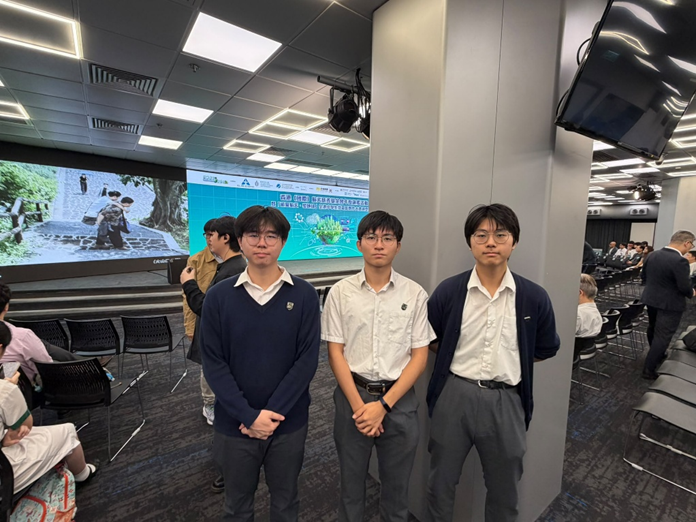
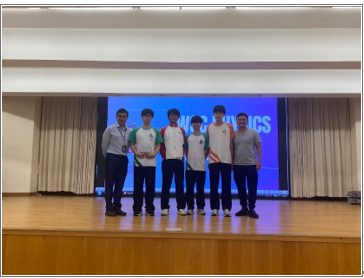
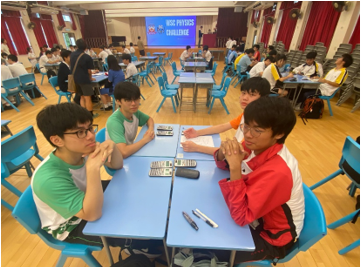
• Wong Shiu Chi Physics Challenge 2025 (Organized by Wong Shiu Chi Secondary School; 24 May 2025)
Highlights & Takeaways: Competing alongside teams from numerous peer schools across Hong Kong in an intense contest, students broadened their scientific horizons and gained valuable exposure by witnessing the calibre of top science students from other schools.
Award: Second Runner-up
Team Members: Ng Ka Yu (5A), Wong Ho Yin (5A), Lai Hau Chi (5D), Tsui Tsz Hin (5D)
Guided by the principle of "Assessment for Learning", the Physics Department adopts a balanced approach combining formative and summative assessments. Through a structured three-tier framework comprising regular quizzes, intensive uniform tests, and school examinations, we continuously monitor student progress, consolidate foundational concepts, and systematically build logical reasoning and public examination readiness.
Assessment Tier | Frequency & Format | Assessment Focus & Pedagogical Impact |
1. Regular Quizzes
| • Conducted weekly or upon completing key sub-topics
| •Foundational Mastery & Study Habits:
|
2. Uniform Tests | • Administered 2 to 3 times per term on an intensive schedule closely aligned with the teaching progression of each form
| • Intensive Checkpointing & Retention:
|
3. School Examinations | • Encompasses Mid-Year Examinations, Final Examinations, and Secondary 6 Mock Examinations
| Bespoke Teacher-Authored & Adapted Papers:
Comprehensive Discrimination & Exam Readiness: |
Vision and Development Background
In alignment with the school's strategic focus on digital education and AI-enhanced pedagogy, the Physics Department has independently developed school based app, a custom school-based Physics learning application built with Generative AI and Vibe Coding technologies. Bridging pre-lesson preparation, classroom inquiry, post-lesson consolidation, and diagnostic assessment, the app transforms abstract physical laws into intuitive, interactive experiences while harnessing learning analytics to cater to diverse learner needs. 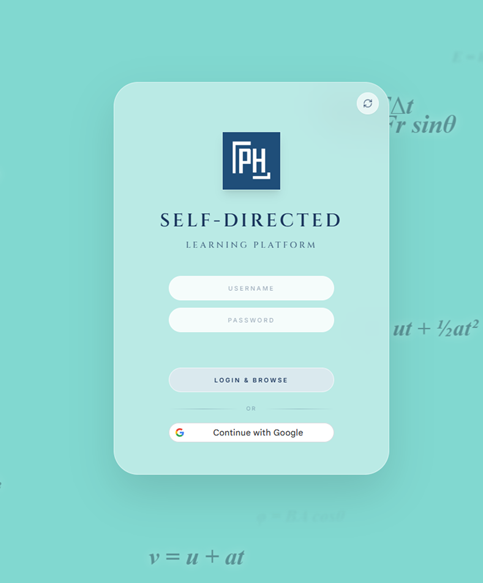
Core Innovative Modules and Pedagogical Applications
Innovative Module | Key Features & Classroom Implementation | Pedagogical Impact & Student Benefits |
1. Interactive Visual Simulations | Custom AI-generated interactive simulations covering abstract topics such as optics and lenses, wave motion, electromagnetism, and atomic physics, allowing students to manipulate variables and observe real-time physical responses. | Visualizes microscopic phenomena and invisible fields, significantly reducing cognitive load and enabling students to construct conceptual models through active exploration. |
2. AI-Assisted Grading & Learning Diagnostics | Integrates an AI grading engine with a quiz metadata repository to deliver instant marking, error-pattern analysis, and personalized student learning reports for regular quizzes. | Pinpoints individual conceptual gaps for targeted revision while guiding students to critically evaluate the accuracy of AI-generated feedback—fostering critical thinking and digital literacy. |
3. Tiered Foundational Practice & LaC Support | Features graduated foundational practice modules, daily formula and diagram consolidation drills, and interactive Language across the Curriculum (LaC) audio-visual vocabulary modules. | Builds mastery and confidence through scaffolded, bite-sized practice while strengthening English physics terminology, supporting both foundational consolidation and high-achiever extension. |
4. On-Demand Video & Self-Directed Learning Hub. | Centralizes lesson recordings, step-by-step workbook solution walkthroughs, and blended online extension modules, paired with progress tracking and completion check-ins. | Empowers students to revisit challenging concepts anytime at their own pace, cultivating self-discipline, metacognitive reflection, and independent learning habits. |
5. Paperless Science Reading & Instant Assessment | Delivers curated popular science articles linking physics principles with societal and ethical issues, accompanied by automated multiple-choice assessments. | Promotes eco-friendly paperless assessment with immediate feedback loops, broadening students' scientific horizons and real-world awareness beyond textbook exercises. |
Through the routine integration of APP, the Physics Department has established a responsive, data-informed teaching cycle: real-time learning analytics enable teachers to identify class-wide trends and individual misconceptions promptly, allowing timely instructional adjustments that help every student build confidence and achieve sustained progress in Physics.
| Level / Stream | Core Topics & Learning Content |
|---|---|
Secondary 3 (Junior Secondary Science – Physics Module) | • Optics and Waves: Rectilinear propagation of light, reflection and plane mirror images, refraction and total internal reflection (optical fibre communication), image formation by convex and concave lenses, and the electromagnetic spectrum
|
Secondary 4 | • Topic I: Heat and Gases: Temperature and thermometry, heat capacity and specific heat capacity, change of state and latent heat, heat transfer processes, and experimental error analysis
|
Secondary 5 | • Topics I & II (Extension): General gas law and kinetic theory of ideal gases; circular motion and Newton's law of universal gravitation (incorporating national aerospace developments and space security)
|
Secondary 6 | • Topic V: Radioactivity and Nuclear Energy: Properties and detection of ionizing radiation ($\alpha$, $\beta$, $\gamma$, and X-rays), radioactive decay and half-life, nuclear fission and fusion, mass-energy equivalence, and nuclear safety
|
School-Based Curriculum Highlights
School-Based Curriculum Highlights | Implementation Focus |
1. Early Integration of Elective Modules | Moving beyond the conventional approach of deferring electives to Secondary 6, Elective E2 (Atomic World) and Elective E4 (Medical Physics) are blended directly into the Secondary 5 curriculum. Starting earlier gives students ample time to consolidate, digest, and reflect deeply on abstract concepts, strengthening cross-topic connections with the compulsory syllabus while reducing cognitive load in their final examination year |
2. Constructivist Pedagogy & Logical Reasoning | Grounded in a constructivist teaching philosophy, lessons guide students to actively build their own conceptual frameworks from everyday phenomena, hands-on inquiry, and physical models rather than relying on rote memorization. Emphasis is placed on rigorous logical deduction, mathematical modelling, and tracing cause-and-effect relationships, equipping students with disciplined yet open-minded scientific reasoning to tackle unfamiliar problems |
3. AI and Digital Learning Ecosystem | Supported by our custom Physics App, AI-assisted grading system, and interactive visual simulations offering lesson recordings, worked solutions, and personalized learning diagnostics |
4.Differentiated Instruction | Regular bite-sized quizzes strengthen foundational mastery and confidence, while blended online extension modules challenge high-achieving students with advanced problem-solving |
Aligned with our school's Physics curriculum vision, the department aims to provide rich scientific learning experiences that foster rigorous yet open-minded inquiry, enabling students to achieve the following goals:
• Cultivate Curiosity and Interest: Nurture students' curiosity about the physical world and sustain their interest in studying physics.
• Construct and Apply Knowledge: Enable students to construct and apply fundamental physics knowledge and experimental skills, while appreciating the interconnections between physics and other disciplines.
• Develop Inquiry and Problem-Solving Skills: Strengthen students' ability to conduct scientific investigations, apply mathematical modelling, and solve problems systematically.
• Master Scientific Language and Reasoning: Equip students to communicate physics concepts clearly using accurate scientific terminology and logical deduction.
• Appreciate the Beauty of Nature: Guide students to appreciate the elegance and order of the natural universe through analyzing the laws governing matter and energy.
• Integrate Interdisciplinary Competencies: Develop students' capacity to synthesize and apply knowledge and skills across physics and related STEAM fields.
• Foster Responsible Citizenship and Ethical Awareness: Cultivate a responsible civic attitude and commitment to personal and community well-being by examining the social, ethical, economic, environmental, and technological impacts of physics.
• Prepare for Future Pathways: Prepare students for further studies and careers in STEM-related fields.
• Promote Lifelong Learning: Inspire students to become lifelong learners of physics and science for continuous personal development.
Annual Development Goals (2026–2027)
• Advance Digital Education and AI-Empowered Pedagogy: Leverage AI-assisted grading systems, interactive visual simulations, and our school-based Physics App to analyze learning data, cater to learner diversity, and build personalized learning pathways.
• Strengthen Language across the Curriculum (LaC) and Reading Literacy: Deepen cross-curricular English initiatives and popular science reading to enhance students' academic English proficiency, note-taking habits, and self-directed learning skills.
• Integrate Values and National Security Education: Upholding the school motto "Perseverance in Virtue and Fortitude" (恒德弘毅), embed reflections on scientific ethics (such as medical physics and nuclear energy) alongside national achievements in aerospace and energy security to nurture national identity and humanistic care.
Subject teacher: Mr. Yu Pak Hei
Subject Vision: Rooted in Science, Exploring the Universe Physics begins with questioning the laws of nature and culminates in a deep care for humanity. Upholding the school motto of "Perseverance in Virtue and Fortitude" (恒德弘毅), the Physics Department is guided by the vision of "Rooted in Science, Inquiring into nature of world ". We strive to nurture students' curiosity about the physical world while developing rigorous logical reasoning, scientific inquiry, and problem-solving skills. By integrating the history of science, scientific ethics, and national advancements in frontier technologies—such as aerospace engineering and energy security—into our lessons, we empower students to engage with the world scientifically and shoulder their responsibilities as informed global and national citizens.
Pedagogical Innovation: AI-Empowered Smart Learning Embracing digital education to cater to learner diversity, our department has developed a cross-platform School-Based Physics Smart App alongside an integrated online learning system. In the classroom, we leverage generative AI to build interactive visual simulations that bring abstract concepts—such as electromagnetic fields, torque, and particle motion—to life, significantly reducing students' cognitive load. Beyond the classroom, AI-assisted grading and learning analytics provide personalized feedback and tiered support, fostering self-directed learning habits and continuous improvement.
Curriculum & Experiential Learning Aligned with the HKDSE Physics curriculum, our programme balances theoretical mastery with hands-on experimental skills while strengthening the academic bridge between Junior Secondary Science and Senior Secondary Physics. Beyond regular laboratory sessions, we actively promote STEAM inquiry projects, Language across the Curriculum (LaC) initiatives, popular science reading, and participation in competitions, equipping students with a solid foundation for future studies and careers in science and innovation.